Loved by God.

My photo
Chicago, IL, United States
* Let go of control. * Trust God. Thank God. Think about God. Talk to God. Talk about God. * It's good to suffer loss. It draws me to the Cross where God's loss is more than what anyone ever lost. * We cannot hear what the stories of the Bible are saying until we hear them as stories about ourselves.
Showing posts with label gospel. Show all posts

Friday, June 5, 2026

What is a Christian?

"I have been crucified with Christ and I no longer live, but Christ lives in me. Therefore, the life I live in the body, I live by faith in the Son of God, who loved me and gave himself for me" (Gal 2:20).
"Therefore, if anyone is in Christ he is a new creation: the old has gone, the new has come!" (2 Cor 5:17).
  • Why has Gal 2:20 and 2 Cor 5:17 been regarded as among the best verses that describe what a Christian is?

Sunday, June 18, 2023

How Inclusive and/or Exclusive Are You?

The Jesus of the Gospels is offensive because of how inclusive He is.
The Jesus of the Gospels is offensive because of how exclusive He is.
The church is offended by His inclusivity, and the world is offended by His exclusivity.

Wednesday, February 8, 2023

How Paul Started His Christian Life (Acts 9:19-31)

    1. How did Saul/Paul begin his Christian life (Ac 9:20)? How did he finish (Ac 20:24)?
    2. How did you start your Christian life? How comfortable are you to teach and preach that "Jesus is the Son of God" (Ac 9:20)? And to prove that "Jesus is the Messiah" (Ac 9:22)? How could Saul do so?
    Paul's early Christian lifeImmediately after his conversion, Saul began his Christian life by preaching in Damascus (Ac 9:20) after spending just a few days with the disciples in Damascus (Ac 9:19) without being instructed by those who were Christians before him (Gal 1:11-24), and without the Jerusalem apostles' prior approval, for their role in verifying individuals and missions (Ac 8:14-17; 9:27-28; 11:1-18, 22-24).
    • Saul goes from persecutor of Christians (Ac 8:3; 9:1) to preaching Christ (Ac 9:20) and proving that Jesus is the Messiah (Ac 9:22), to being persecuted (Ac 9:23, 29) and needing protection (Ac 9:25, 30).

    Thursday, September 2, 2021

    The Crucifixion (Fleming Rutledge)

    Fleming Rutledge Preaching the Cross of Christ (Jan 2021). The Crucifixion, Advent and Preaching (2020). 
    10 Reasons to read Fleming Rutledge’s ‘The Crucifixion’.
    1. The Passover lamb
    2. the goat driven into the wilderness, 
    3. the ransom
    4. the substitute
    5. the victor on the field of battle, 
    6. the representative man
    each and all of these and more have their place, and the cross is diminished if any one of them is omitted. We need to make room for all the biblical images.
    • "Your sin is the biggest problem in the world. Do you hate it? Do you make war on it?" – 
    • Karl Barth specifically notes that sloth [spiritual laziness which is the prime deadly sin of today] gives rise to
      • callous indifference
      • racism and xenophobia, 
      • increasing competitiveness [jealousy], 
      • excessive consumption [appetites], 
      • the desire for total security from threats [fear], and 
      • a willingness to use violence to achieve one's ends [anger].
    • Paul Tillich speaks of self-complacent [satisfied] finitude.
    • One mark of godly Christians is that you fear sin more than you fear suffering or covid.
    • A narrative sermon has a plot. It has
      1. a beginning,
      2. a destabilizing center,
      3. a resolution. The resolution should come as a surprise, as a welcome surprise. Living words for life in the midst of death--every sermon ideally should be that. It should take the hearer from death to life.
    • Preach a sermon that summons the congregation to an apocalypse, a revelation, something revealed, something new, something transformativeThe purpose of the narrative is to lead the congregation from depression, despair, indifference into an eye-opening new way of understanding what God has done. God is the agent.
    • Do sermons as dramas. I believe in that. The sermon is a drama, not a teaching. People say my sermons had beginnings, middles and ends. That's the best way to do it because the gospel itself is a story. The story of Jesus Christ is a story.
    • There's a Jesus kerygma [proclamation; announcementthe preaching of the apostles as recorded in the NT] and there's a Christ kerygma. The NT is a Christ kerygma, which we often turn into a Jesus kerygma. That means if we tell enough stories about what Jesus did and summon people to do what Jesus did, that's a Jesus kerygma. But that's not the same as the justification of the ungodly, the phrase Paul uses twice, which is the center of the gospel.
      • The justification of the ungodly is NOT a message about how we should try to be like Jesus. It's a message about what Jesus has done and his ongoing life.
    • Preach every Sun about the ongoing life of Jesus in the community: "Look what we can do because of this ongoing life of Jesus." NOT "Be like Jesus," but "Listen for his voice, his living voice; listen for the gospel; listen for what God is doing and has done and will do. Even through you, this little Christian church / congregation, God is working even through you, even in the midst of this terrible, demonic plague, God is still working through little bodies of Christians." Look at what is happening through these little bodies of Christians, NOT "go and do likewise," but look at what Jesus is already doing, what God is already doing, what the Holy Spirit, the Trinity is already doing. In other words, not exhorting, but enabling, not just teaching [what 3-point tends to do]. Sermon is not just teaching; it is enabling---and enabling not only belief, but enabling action that arises out of the belief. So when Jesus says, "Go and do likewise," he doesn't mean "Copy me." He means, "Here is my power, living in my vine, my beloved, my chosen."
    • Liberalism is a diverse, but identifiable approach to Christianity, one that differs significantly from historic orthodoxy, evangelicalism and fundamentalism.  Liberals believe they are making Christianity relevant, credible, beneficial, and humane. Evangelicals like J. Gresham Machen believe they are making something other than Christianity--the dividing line a century ago, and the division persists.
    • Lifting Jesus’ teaching above any claims about his person. The true religion is the way of Christ. Asserting that Christianity is essentially a life, not a doctrine. Cf. Traditional Protestant orthodoxies place the substitutionary atonement of Christ at the center of Christianity.
    • Liberal theology is defined by its openness to the verdicts of modern intellectual inquiry, especially the nature and social sciences; its commitment to the authority of individual reason and experience; its conception of Christianity as an ethical way of life; its favoring of moral concepts of atonement; and its commitment to make Christianity credible and socially relevant to modern people.
    • The idea of liberal theology is nearly three centuries old. In essence,
      it is the idea that Christian theology can be genuinely Christian without being based upon external authority. Since the 18th century, liberal Christian thinkers argue that religion should be modern and progressive and that the meaning of Christianity should be interpreted from the standpoint of modern knowledge and experience. cf. the view of scripture as an infallible revelation and theology as an explication [vs. explanation] of propositional revelation.
    • The movement in modern Protestantism which during the 19th century tried to bring Christian thought into organic unity with the evolutionary world view, the movements from social reconstruction, and the expectations of ‘a better worldwhich dominated the general mind. It is that form of Christian faith in which a prophetic-progressive philosophy of history culminates in the expectation of the coming of the Kingdom of God on earth.


    Saturday, June 9, 2018

    Legalism, Liberalism and the Gospel

    Ben Toh; June, 2018
    Legalism (conservatives, generally“older”) “Jews”
    Licentiousness (liberals, generally “younger”) “Gentiles”
    The Gospel
    God is holy – shape up.
    God is love – be yourself
    God is holy and love.
    Man is a soul. Spiritual life important.
    Man is a body. Physical life important.
    Man is both body and soul.
    Just teach the Bible (evangelism). Focus on the soul and eternal life.
    Just do social justice. Focus on caring for the present life of all people.
    Do both.
    Sin is very serious – beat yourself up and/or beat up (criticize) sinners.
    Sin is no big deal – ignore sin, minimize sin in yourself and others.
    See Christ on the cross – he took your sin very seriously and still loves you.
    Repent of “sin.”
    Repentance? What is that?
    Repent of sin, especially self-righteousness.
    Reject physical pleasure. “Deny yourself.”
    Satisfy your physical desires. What feels right is right.
    Physical enjoyment is good, but live wisely.
    Hard to embrace unrepentant people – people  who don’t change.
    Embrace people with no consideration of whether they change or not.
    Embrace people with prayer and tears for their repentance/conversion.
    You must do this. You must do what I say.
    You don’t have to do anything that you don’t want to do.
    Do what is right in love (grace and truth).
    You must earn righteousness.
    You don’t really need righteousness. Who knows or cares what that is anyway.
    Receive God’s perfect righteousness.
    Critical, condescending, condemning, censuring, conditional.
    Embracing, welcoming, unconditional, non-discriminatory. Ignore and overlook issues.
    Face and confront issues with unconditional love.
    Critical of (hates) liberals - too loose.
    Critical of (hates) conservatives - too rigid, inflexible.
    Critiques both. Loves both.
    Impatient. Absolute.
    Tolerant. Relative.
    Gracious. Kind. Absolute and tolerant.
    Just change.
    People don’t need to change.
    People can change, but it takes time. There are no quick fixes.

    Either my way of the highway. Anyway is okay. Jesus says, "I am the way."

    Friday, November 22, 2013

    The Gospel in 1-2 Samuel


    The message of 1-2 Samuel is NOT "be like David" and "don't be like Saul."

    God is David's ultimate concern. 1-2 Samuel are about Israel's first kings, Saul and David. Ultimately, they look to the great King, God himself. These are gospel-filled stories, unflinchingly honest about sin and society, but saturated with hope of salvation. The two key characters (apart from Samuel) are both royal sinners. But Saul and David are as different from one another as darkness is from light. For Saul, God does not appear to be a major concern, perhaps not a reality at all. For David, God is his ultimate concern, the ultimate reality, and carries ultimate weight. This is what it means to "honor" God. Therefore, "those who honor me I will honor, and those who despise me shall be lightly esteemed" (1 Sam 2:30). Saul is destined to fall and David to rise.

    Sunday, November 17, 2013

    The Gospel in Ruth


    God cares for his own with great loving kindness. Ruth is the story of a young Moabite widow who comes to know the covenant love the one true God and the joy of belonging to his people through her Jewish mother-in-law, Naomi. Through these two women God's sovereign hand is at work to redeem a people for himself. God, the hero of the story, is the faithful God who cares for his own and provides what they need with great loving kindness (hesed). Like Ruth, we too "were separate from Christ, excluded from citizenship in Israel and foreigners to the covenants of the promise, without hope and without God in the world" (Eph 2:12). Like Ruth, we too need a Kinsman-Redeemer who will do all that is necessary to remedy our helpless condition.

    The Gospel in Judges


    Judges portrays the people of God languishing without good leadership. Judges and 1-2 Samuel bridge the gap from the entrance of the people of God into the Promised Land under Joshua to their expulsion from the land due to unfaithful kings in 1-2 Kings. Since the conquest of the land is not complete, Judges begins with the question of who will lead in battle (Judg 1:1) and ends with "In those days Israel had no king; everyone did as they saw fit" (Judg 21:25). The need for a king to lead God's people into their full inheritance is an important theme.

    Saturday, November 16, 2013

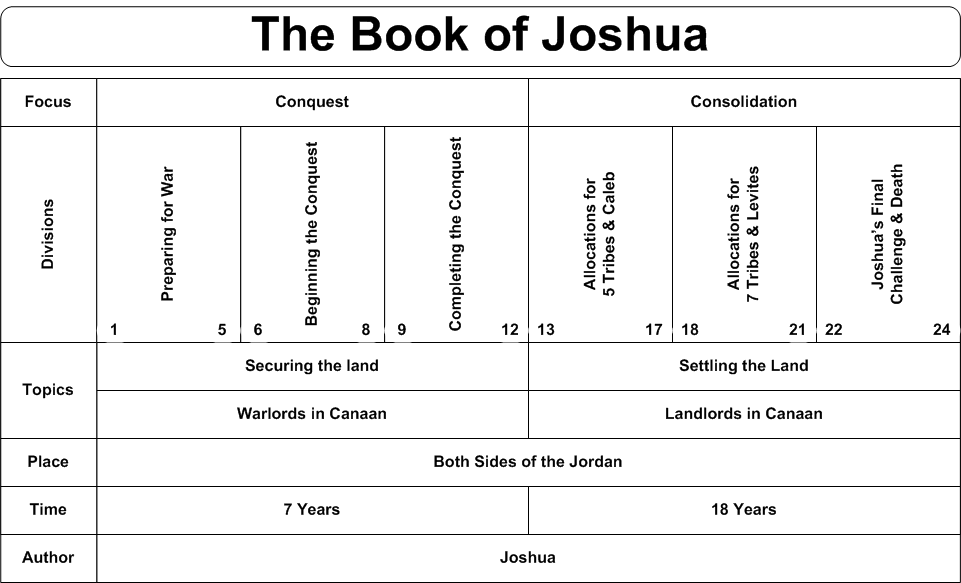
    The Gospel in Joshua


    God gives and Israel inherits is the formula that is repeated from the beginning to the end of Joshua. The spotlight is not on Joshua's courageous moral example or on timeless principles of conduct, but on God's fulfillment of a historical promise. Even Joshua's name ("Yahweh Saves!") points away from himself to the real hero of the story. Joshua is a story of grace.

    Friday, November 15, 2013

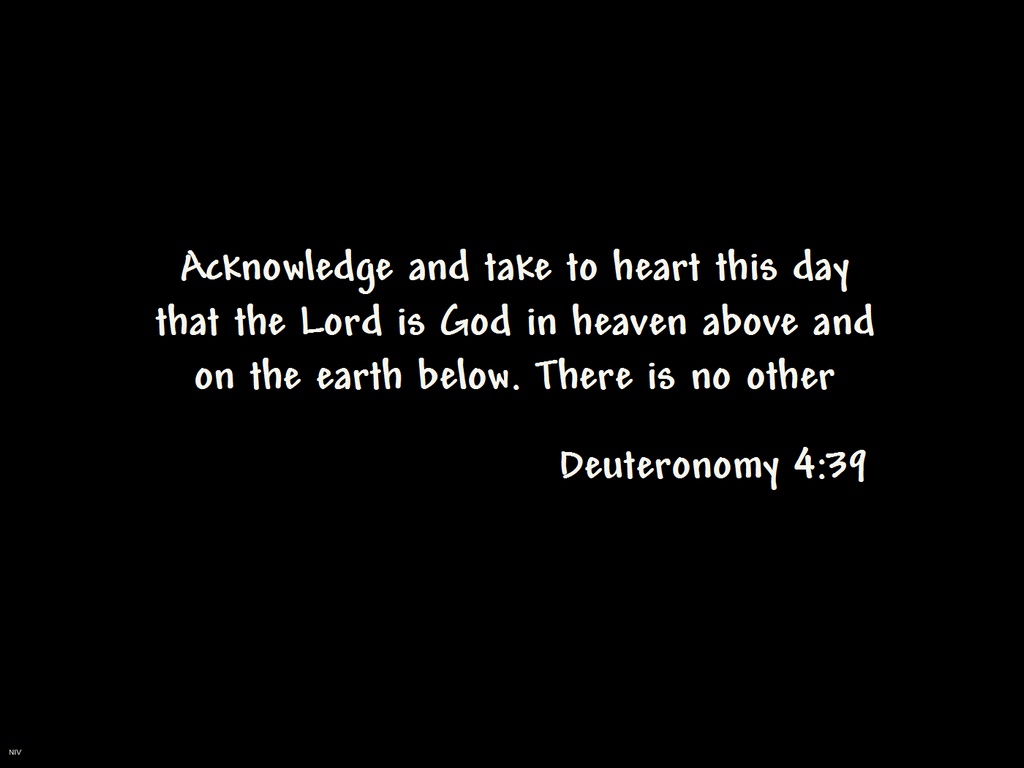
    The Gospel in Deuteronomy


    Deuteronomy contains Moses' last three sermons and two prophetic poems about Israel's future. It is one of the most important books in the OT because:
    1. Jesus quoted it more than any other OT book.
    2. Jesus used it in his own life more than any other OT book (Lk 4:1-13).
    3. Jesus summarized the supreme command of the Bible from Dt 6:4-5 (Mt 22:37; Mk 12:30).
    4. It is quoted over 80 times in the NT, and references to it occur in 22 of the 27 books.
    The law is surrounded by grace, and keeping the law is a response to grace received (first 4 chs) and anticipated (last 4 chs). The gospel is seen in the overall structure of the book.

    Thursday, November 14, 2013

    The Gospel in Numbers


    The Christian life is a wilderness journey of unpredictable transition and testing on the way to our final destination. Numbers narrates the arduous wilderness journey of Israel, fraught with trials and failures every step of the way, on the way to the Promised Land. The "wilderness life" only requires that the people of God exercise faith by trusting daily in his guidance and provision.

    The wilderness journey testifies to God's faithfulness in the following ways:
    1. God's saving grace in delivering them out of slavery in Egypt.
    2. God fulfilling his gracious promises he swore to Abraham, Isaac and Jacob (Gen 12:1, 7; 26:2-4; 35:12).
    3. That God provided for them and sustained them for forty years reveals that God is indeed their Shepherd (Ps 23:1).
    4. To be among them in the wilderness meant, above all, to have the Lord dwelling in their midst with his tabernacle pitched at the heart of the Israelite encampment to atone for their sins and to guide them into the land flowing with milk and honey.

    Tuesday, November 12, 2013

    The Gospel in Leviticus


    Jesus is the Great High Priest and the sin offering. It may be natural to think of Leviticus in terms of the grace of the gospel, because its ideas and concepts find their ultimate fulfillment in the person and work of Jesus--sacrificial atonement or the priesthood. Hebrews makes these connections by emphasizing again and again that Jesus is the Great High Priest (Heb 4:14; 10:21), the one without sin (Heb 9:14; 9:7), who offers himself as the ultimate sacrifice that cleanses all our sin (Heb 1:3; 7:26-27; 9:12, 14, 26, 28; 10:10, 12, 14; 13:11-12) which gives us confidence to draw near to God (Heb 10:19-22).

    The Gospel in Genesis


    I highly recommend the ESV Gospel Transformation Bible.

    The foundation stories of Genesis set the stage for understanding the Gospel in many ways.
    1. The Creator is the King over all his creation.
    2. Sin entered the world and took away human freedom.
    3. God reveals the depth of his love and grace, despite humanity's continual disobedience.
    4. God called frail and profoundly flawed human beings to represent him: Noah, Abraham, Isaac, Jacob, and Joseph.
    5. These giants of faith learned to love God more than the goods of this life.
    6. The riches of God's grace render people without excuse.
    7. The Lord of the universe committed himself by oath to one man, Abraham.

    Thursday, October 13, 2011

    What is the Purpose of West Loop UBF Church?

    Bound_lamb_3
    "I consider my life worth nothing to me ... my only aim is to ... testify to the gospel of the grace of God" (Acts 20:24, NIV, ESV)


    What's the point? When we began having Sunday Worship Services at West Loop on Jan 4th, 2008, I came up with 3 short catch phrases: "Love God. Understand People. Impact the World." Yet, over the last few years, not a few people have asked me, "What is the purpose of West Loop UBF?" After almost 4 years (probably a little late!), this might be my first written attempt to answer the question.

    Wednesday, October 5, 2011

    The Wind Blows Wherever It Pleases (Philippines UBF)

    Antipolo
    The wind blows wherever it pleases. You hear its sound, but you cannot tell where it comes from or where it is going. So it is with everyone born of the Spirit(John 3:8).

    Like I had never left Chicago. After living in Manila for over 2 months (minus 1 week in Singapore and Kuala Lumpur), I returned to Chicago on Oct 3. When I got home, I said to my wife, "It feels as though I had not left at all." She echoed the exact same sentiment and added, "We are so close that we can even dance together in 2 different countries." Even an unromantic person like myself was quite touched by her spontaneous comment. I am so glad to be back, and I also look forward to going back to the Philippines again.

    Monday, August 15, 2011

    What is the Gospel? (Rom 1:1-6, 14-17)

    Gospel
    After a very brief introduction of himself (Rom 1:1), Paul begins his magnum opus by launching off into what the gospel is (Rom 1:2-6,14-17). What is the gospel (to which Paul has been set apart)?