Loved by God.

My photo
Chicago, IL, United States
* Let go of control. * Trust God. Thank God. Think about God. Talk to God. Talk about God. * It's good to suffer loss. It draws me to the Cross where God's loss is more than what anyone ever lost. * We cannot hear what the stories of the Bible are saying until we hear them as stories about ourselves.
Showing posts with label Exodus. Show all posts

Tuesday, January 2, 2024

Re: Matthew 6:33 (2023)

😪

On Sun, Jan 8, 2023 at 4:07 PM Benjamin Toh <benjamintoh@gmail.com> wrote:
I. Joy.

In 2022 I don't remember why I chose "Be joyful always" (1 Th 5:16) as my KV for the first time in 40 yrs. But I do know that no matter what happens or no matter what does not happen I MUST have joy in my heart and soul. I'll start with joyful events.

The joy of studying and preaching Exodus for the first time in 2022. In brief, all people need only 3 things without which we will still be enslaved by someone or something and are no different from the slaves oppressed by Pharaoh in Egypt:
  1. Deliverance (Exo 19:4; 20:2). We need a Savior (Mt 1:21). No one can save themselves. I need salvation to "be joyful always."
  2. Obedience (Exo 19:5; 20:3-17). We need to obey the Law (Jn 14:15) to be happy. I need to obey God "be joyful always."
  3. Tabernacle (Exo 25:8; 29:44-46). We need a tabernacle for God to dwell with us (Jn 1:14). I must build my tabernacle to "be joyful always."
In 2023, no matter what, the only 3 things I need--deliverance/salvation, obedience/Law, tabernacle--do not change one iota.

The most joyest event in 2022 is when Johnny, my youngest and 7th grandchild, was born on 2/13/2022. Christy and I baby sit him 3 days a week, 6 hours each day. It is the first time in my 6 decades of life that I've spent so much time with a baby, since I hardly spent any time with our own 4 kids and 6 prior grandchildren when they were babies. But by enjoying baby Johnny 3 days a week I realized that I had missed 10 previous opportunities to enjoy lovely babies.

Next, though this was a loss for our Podil members, it was a happy surprise that John and Maria became a part of our WL church community in mid 2022. Dasha tells me that WL stole John and Maria from them. At the end of 2022 we also celebrated the joyous white wedding of Sarah Gutierez. Finally, what is always joyful all year round without exception is knowing your prayer, love and support for me, despite my many shortcomings and sins. But things happened in 2022 that I was quite sad and sorry about, yet God wants me to never lose my joy in Him.

Departure of friends. When people leave the church after many years or even decades, I feel that I've lost some friends that I at least see every Sunday at church. And if they left the church because of me, I'm sorry that I said things that caused them to leave. Despite the departure of some long standing older and younger people, I know that God has comforted and helped me to keep my heart and to "be joyful always" only because of Christ.

Indicted for a criminal offense. In mid-December half a dozen FBI agents came to my house unannounced to arrest me in hand-cuffs at 7:15 am for committing health care fraud. Without going into detail about the charges, it completely surprised me. It's the first time I've ever been hand-cuffed as a potentially dangerous criminal. I was in detention with leg chains for a day with 2 other convicted felons in the same jail cell, and I was released on bond to be tried at a later date. If found guilty my maximum sentence is 10 years in prison + a fine of up to $500,000. This waiting for a jury trial and their verdict is uncomfortable and distressful with many unknowns. But my key verse says, "be joyful always." I learned practically that joy is a choice which has nothing to do with my situation or circumstances. Even Jesus saw the joy set before him while being tortured, crucified and executed on the cross (Heb 12:2). So "be joyful always" is still a great KV for 2023.

Why did this happen? I've been praying that God would sanctify and purify me to be more like Jesus. So, without a doubt God is faithful to answer my prayer. Would you also pray for yourself for God to truly sanctify and purify you?

II. Because of the possibility and prospect of being found guilty and sent to jail, a few key verses for 2023 are:
  • Phil 4:8b--"if anything is excellent or praiseworthy--think about such things."
  • Isa 55:9--"my ways [are] higher than your ways, and my thoughts than your thoughts."
  • Mt 6:33--"But seek first his kingdom and his righteousness..."
  • Heb 13:5--"Keep your lives free from the love of money and be content with what you have, because God has said, 'Never will I leave you; never will I forsake you,'" which is from Dt 31:6: "Be strong and courageous. Do not be afraid or terrified because of them, for the Lord your God goes with you; he will never leave you nor forsake you."
With these verses in mind, being in jail is no big deal in the big picture and in the scheme of things. I hope Christy will visit me in jail. But I have to confess that I will miss seeing my 7-8 grandchildren grow up.

In 2023, God willing, and with your love, prayer and support, John and I will preach. I pray to preach through Acts. Pray for God to bless our outreach and evangelism at UIC. Pray for Ukraine and the end of the war.

"Never will I leave you, never will I forsake you," therefore seek first his kingdom and his righteousness.

Monday, December 5, 2022

Stephen is Killed for His Faith (Acts 7)

  1. Who are the people Stephen referenced in their historical order? What were the important events in each of their lives? [Persons Stephen spoke about in Acts 7]
    1. The Patriarchal Period (7:1-16):
      1. Ac 7:2 (Genesis 12-25).
      2. Ac 7:8a (Genesis 21-28).
      3. Ac 7:8b (Genesis 25-50).
      4. Ac 7:9 (Genesis 37-50).
    2. Moses and the wilderness wanderings (7:17-43):
      1. Ac 7:20 (Exodus, Leviticus, Numbers, Deuteronomy).
      2. Ac 7:40 (", ", ", ").
    3. The Tabernacle and the Temple; the establishment of the monarchy (7:44-50):
      1. Ac 7:45a (Exodus, Numbers, Deuteronomy, Joshua).
      2. Ac 7:45b (1,2 Samuel, 1 Kings, 1 Chronicles, Psalms)
      3. Ac 7:47 (2 Samuel, 1 Kings, 1,2 Chronicles, Proverbs, Ecclesiastes, Song).
  2. What was his attitude toward his accusers (Ac 7:2a)? What frames Stephen's sermon (Ac 7:2, 55)?
  3. Why is it important for Stephen to review this history in such detail in his "sermon"?  [Can Christians do so today?] Was he primarily defending himself? Was he anti-Law (Ac 7:38, 53)? What was the recurrent pattern of the people of Israel (Ac 7:9, 25-29, 39, 41)? What was his primary point (Ac 7:4, 37-40, 48-49, 51-53)?
  4. What was the climax and conclusion of his speech (Ac 7:51-53, 8; Isa 63:10; Heb 11:32-38; 1 Ki 18:4, 13; Jer 26:20-24; Mt 5:10-12; Lk 6:22-23; 11:47-51)? How are Stephen's accusers guilty of the very same thing they are accusing Stephen of doing? Did he have to indict/enrage them by being blunt, direct and provocative?
  5. What was Stephen's disposition (Ac 6:3, 5, 10, 15; 7:55; Mt 10:19-20; Lk 21:15)? Why were they so angry at such a God filled man (Ac 7:54, 57; Jn 3:19; 14:15; 16:2)? What basis did they have to stone him (Ac 7:58; Lev 24:11, 14-16)? Who were the ones who stoned him (Ac 6:12-14; Dt 17:7)?
  6. What and who did Stephen see (Ac 7:55-56; 2:34-35; Ps 110:1; Dan 7:13)? How were Stephen's last words similar to that of Christ (Ac 7:59-60; Lk 23:34, 46; Ps 31:5)?
  7. How did Stephen's death launch the Great Commission (Ac 8:1-3; 1:8; Mt 28:19)? Where were they scattered to and what did they do (Ac 8:4-5, 40; 9:32; 10:32; 11:19)?
  8. Who agreed, approved and consented to killing Stephen (Ac 8:1; 6:10)? How did this affect him (Ac 8:3; 22:20; 26:9-12; Gal 1:13; Phil 3:6)? Why was he so determined to destroy the church (Dt 21:22-23)?

Tuesday, December 28, 2021

Only God can Bring us back Home (Psalm 23:3)


In the last few years at West Loop UBF, our sermons were from:
  • Matthew's Gospel [referencing Stanley Hauerwas].
  • Parables of Christ [explained by Kenneth Bailey, who's book "Jesus Through Middle Eastern Eyes" won Christianity's book of the year].
  • 1 Corinthians [commentaries by Richard Hays, Gordon Fee]; 2 Corinthians.
  • Exodus currently [by Robert Altar and Leon Kass].
A few brief things we learned:
  • "He brings me back" or "My life, He brings back" (Ps 23:3). The KJV popularized the phrase "he restores my soul." It has inspired and encouraged multitudes of Christians over the centuries. The NIV says, "he refreshes my soul." But it is a paraphrase from the Hebrew which literally says, "He brings me back" or "My life, He brings back." Just as the good shepherd [representing God/Christ] finds and brings the lost sheep back (Lk 15:1-7), and the woman combs through her house to find her lost coin (Lk 15:8-10), and the father who longs to bring back both of his lost sons (Lk 15:11-32), the psalmist King David confesses that God brought him back to Himself. We are encouraged to learn that only God can restore a lost sinner.
  • Freedom from judgment. Consciously or not, we judge others and then insist that our judgment is unquestionably correct. But Paul says, "I care very little if I'm judged by you or by any human court...it is the Lord who judges me" (1 Cor 4:3,4). We learn that one is truly free when they live before the just judgment of God rather than the biased judgments of men.
  • "New creation" (2 Cor 5:17). We incline toward doing things--even good things--habitually. But in Christ every single day, every single morning, every single moment is a brand new day, a brand new morning and a brand new moment, not the same old, same old boring habitual predictable routine.
  • Liberation from...liberation for. As we now begin studying Exodus, we learn that God gives us freedom not to do whatever we want, but that we can now freely choose who to serve: Pharaoh [boss, leader, supervisor, a human being] or God alone.

Wednesday, November 3, 2021

Imperatives, Indicatives and Ironies in Exodus 1-2

IRONIES
(Read Exodus 1-2)
  • The more Pharaoh tried to reduce the number of Israelites (Exo 1:9-11, 13-14), the more they increased in number (Exo 1:12, 7).
  • Pharaoh wanted to drown the Hebrew males (Exo 1:22) but he and his army were drowned (Exo 14:28).
  • Pharaoh feared the Hebrew men (Exo 1:16, 22) but it was the women who thwarted him (Exo 1:15; 2:1,4,9-10).
  • Pharaoh tried to destroy Hebrew men, but he fully educated, trained, equipped and raised 1 Hebrew man Moses in his very own palace, who later delivered all the Hebrew slaves.
* Is God mentioned in the above? Is God involved? What do you learn? (Gen 3:5; 50:20; Ps 14:1; Prov 16:9)
  • It was as though Moses belonged nowhere in this world. “Moses named him Gershom, saying, 'I have become a foreigner in a foreign land'” (Exo 2:22b). Moses was never at home anywhere...
    1. ...not with his family and his own people though he was born a Hebrew.
    2. ...not as an Egyptian, though he grew up in an Egyptian palace.
    3. ...not with his Midianite family in the wilderness.
    4. ...not in the promised land, for he wasn't allowed entrance.
  • The Creator is not accepted or received by his creation. "He was in the world, and though the world was made through him, the world did not recognize him. He came to that which was his own, but his own did not receive him" (Jn 1:10-11).
  • Jesus' birth. He was born in a manger, while Caesar ruled the entire Roman world (Lk 2:1,7). Yet Jesus is the King of kings and Lord of lords (1 Tim 6:15; Rev 17:14; 19:16).
  • Jesus' death. "You do not realize that it is better for you that one man die for the people than that the whole nation perish" (Jn 11:50; 2 Cor 5:21).
  • "Again I tell you, it is easier for a camel to go through the eye of a needle than for someone who is rich to enter the kingdom of God" (Mt 19:24).
IMPERATIVES and INDICATIVES [Imperatives (commands) = what you should do {Law}. Indicatives = what God has done {Grace}. Christendom and evangelicalism often do not clearly distinguish Law / Grace, and misunderstands or confuses imperatives / indicatives, which confuses the church.]
  • You don't repent and obey (and believe) [imperative] to be saved, but because you are saved (by grace) [indicative] you repent and obey [and believe] (Mk 1:15).
  • The imperatives are based on the indicatives and the order is not reversible. [Law is based on Grace.]
    • "I am the Lord your God, who brought you out of Egypt, out of the land of slavery [indicative]. You shall have no other gods before me [imperative]" (Exo 20:2-3; Dt 5:6-7).
    • "For God so loved the world [indicative] that he gave his one and only Son [indicative], that whoever believes in him [imperative] shall not perish but have eternal life" (Jn 3:16).
    • "The time has come," he said, "The kingdom of God has come near [indicative]. Repent and believe the good news [imperative]!" (Mk 1:15).
    • "We love [imperative] because he first loved us [indicative]" (1 Jn 4:19).
    • "...work out your salvation with fear and trembling [imperative], for it is God who works in you to will and to act according to his good purpose [indicative]" (Phil 2:12-13).
    • "...he saved us [indicative], not because of righteous things we had done [imperative], but because of his mercy [indicative]..." (Tit 3:5).
    • For in the gospel the righteousness of God is revealed—a righteousness that is by faith from first to last, just as it is written: “The righteous will live by faith.” (Rom 1:17, NIV)
    • For the righteousness of God is revealed in the gospel from faith to faith, just as it is written, "The righteous by faith will live." (Rom 1:17, NET)

Sunday, October 17, 2021

Pharaoh's Hardness of Heart

During the plague cycles there are 3 different ways Pharaoh's hardness of heart is expressed:
  1. Pharaoh hardened his own heart (Exo 8:15,32; 9:34).
    • "But when Pharaoh saw that there was relief, he hardened his heart and would not listen to Moses and Aaron, just as the Lord had said" (Exo 8:15).
    • "But this time also Pharaoh hardened his heart and would not let the people go" (Exo 8:32).
    • "When Pharaoh saw that the rain and hail and thunder had stopped, he sinned again: He and his officials hardened their hearts" (Exo 9:34).
  2. Pharaoh's heart was hardened or became hard (Exo 7:13-14,22-23; 8:19; 9:7,35).
    • "Yet Pharaoh's heart became hard and he would not listen to them, just as the Lord had said. Then the Lord said to Moses, 'Pharaoh's heart is unyielding; he refuses to let the people go'" (Exo 7:13-14).
    • "But the Egyptian magicians did the same things by their secret arts, and Pharaoh's heart became hard; he would not listen to Moses and Aaron, just as the Lord had said. Instead, he turned and went into his palace, and did not take even this to heart" (Exo 7:22-23).
    • "...the magicians said to Pharaoh, 'This is the finger of God.' But Pharaoh's heart was hard and he would not listen, just as the Lord had said" (Exo 8:19).
    • "Pharaoh investigated and found that not even one of the animals of the Israelites had died. Yet his heart was unyielding and he would not let the people go" (Exo 9:7).
    • "So Pharaoh's heart was hard and he would not let the Israelites go, just as the Lord had said through Moses" (Exo 9:35).
  3. God hardened his heart (Exo 9:12; 11:10; 14:8).
    • "But the Lord hardened Pharaoh's heart and he would not listen to Moses and Aaron, just as the Lord had said to Moses" (Exo 9:12).
    • "Moses and Aaron performed all these wonders before Pharaoh, but the Lord hardened Pharaoh's heart, and he would not let the Israelites go out of his country" (Exo 11:10).
    • "The Lord hardened the heart of Pharaoh king of Egypt, so that he pursued the Israelites, who were marching out boldly" (Exo 14:8).

Wednesday, October 13, 2021

Liberation from Slavery (Exodus 1-2)

Exodus outline [chapters]:
  1. 1-14: Exit from Egypt. In graphic detail God demonstrates his identity as Creator.
  2. 15-18: Journey to Sinai. The people's slowly growing trust in God's provision for their daily needs: manna, meat, water, protection.
  3. 19-24: 10 Commandments and the Book of the Covenant. Laws for a new society based on God's justice and mercy to maintain their newfound freedom. The 10 Commandments were placed in the holiest place at the center of the community.
  4. 25-31: Tabernacle Instructions. God descends from the heavens and from Mt. Sinai and dwell in their midst to be present daily and to travel everywhere with them (Exo 40:38).
  5. 32-34: Golden Calf Crisis and God's Forgiveness. God forgives sinful rebellious people and provides a 2nd exodus for them, an exodus from the bondage of their own sinful inclinations (Gen 6:5; 8:21). Ex 34:6-7 are some of the most critically theologically significant OT verses.
  6. 35-40: Tabernacle Build and God's Dwelling Presence. The people's heartfelt willing response, bringing generous offerings and building the tabernacle. Exodus ends with God's visible descent to dwell on earth in their midst (Exo 40:34-38; Jn 1:14).
In summary:
  • 1: God's deliverance of the people from forces of evil, oppression and bondage.
  • 2,3,5: Living in true freedom must be in an ongoing relationship with God. God gives wilderness provision, builds trust from daily troubles, orders their lives by laws and teaches them to live as forgiven sinners. The laws, given by God the Creator, are critical in their role as a blessing to all nations: lifting the burdens of the oppressed, just courts, healthy ethical living, truth-telling and worship.
  • 4,6: God's daily presence in the midst of their lives. The tabernacle creates space for God as well as a place to belong, to give generously and to experience the glory of the Lord.
Questions [m-memorize]:
  1. What made the new king fearful and why (Exo 1:7-10)? What did he do (Exo 1:11,13)? Why did it not work (Ex 1:12, 7; Gen 1:28; 12:2; 18:18; 22:17)?
  2. What is the king's next birth control strategy (Exo 1:15-16)? How did the midwives respond and why (Exo 1:17-19)? Why were the midwives named but not the king (Exo 1:15, 8, 18, 22)? Why should you fear God (Exo 1:20-21; 3:5; 4:24; Prov 1:7; 9:10 m; Ps 112:1; 2 Cor 5:11; 7:1)?
  3. How ruthless is Pharaoh's policy of mass scale forced male infanticide (Exo 1:22; Ac 7:19)? Who would God eventually drown (Exo 14:28)?What is ironic about Pharaoh's fear of the Hebrew men (Exo 1:16,22; see next question.)? 
  4. Who were the 5 women who defied Pharaoh's authoritarian decree (Exo 1:15; 2:1,4,9-10; 6:20; 15:20)? Why did Moses' mother do what she did (Exo 2:1-3; Heb 11:23)? What did Moses' sister do (Exo 2:4-9)?
    • How is Moses' story a pointed allusion to the Flood story (Exo 2:3; Genesis 6-11)? [The basket Moses is placed in is the same word used for Noah's ark.]
    • How does water play a thematic role in Moses' career (Exo 2:3, 10; 14:22,28; 15:25; 17:2,6)?
  5. What is the time interval between Exo 2:10 and Exo 2:11 (Ac 7:23)?
  6. What does Moses' first spoken words suggest about him (Exo 2:13)? What was good and bad about his actions (Exo 2:11-13, 17; Ac 7:24; Heb 11:24-26 m)? Why did he do this (Ac 7:25)? Was Moses "ready" to serve God? Why?
  7. How did the Israelite respond to Moses (Exo 2:14; Ac 7:26-28)? Why did Moses flee to Midian (Exo 2:15)? What happened to him there (Exo 2:16-3:1)? How long was he there (Ac 7:30)?
    • How does the women [or woman] coming to draw water follow the narrative convention of the betrothal type-scene (Exo 2:16; Gen 24:15-20; Gen 29:9-11; Jn 4:7,16,25-26,39)?
    • What is bread the common biblical synecdoche for (Exo 2:20)?
  8. Why was Moses a man who was never at home anywhere (Exo 2:22)?
    • Do you sometimes feel as though you don't belong anywhere (Jn 1:10-11)?
  9. What are the 4 verbs that describe God's consideration of the Israelites (Exo 2:24-25; 3:7)?
    • Do you have a sense and awareness of God's presence and that God "knows" you personally (Gen 16:13; Gal 2:20; 4:9; 1 Cor 8:3)?
  10. What is the time interval between Exo 2:22-23 and Exo 3:1-2 (Ac 7:30)?
Slaves Need Liberation (Exodus 1-2).

Saturday, October 9, 2021

Exodus Introduction: Freedom and Obedience

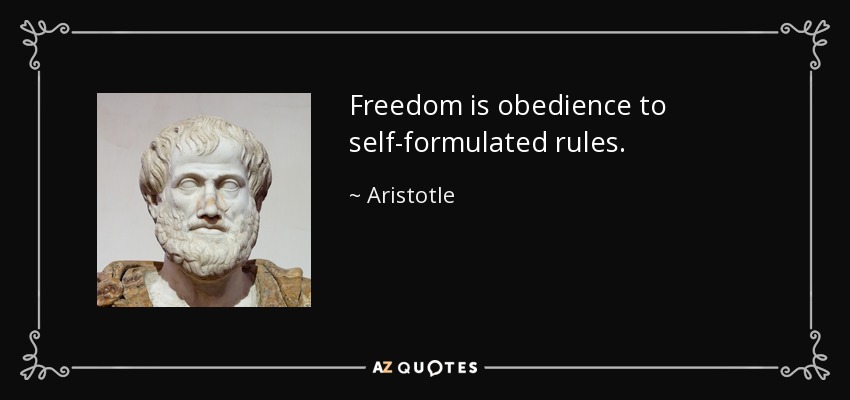
Aristotle quote: Freedom is obedience to self-formulated rules.
  • Take a few weeks to read through the book of Exodus (chapter 1-40). Is there anything that God by His Spirit is saying to you? Write it down.
  • How does Genesis begin and end (Gen 1:1; 50:26)? How is Exodus a continuation of Genesis (Exo 1:1; Gen 46:8)?
  • What are the 2 parts of Genesis [chapter 1-11 {the origin of the world}; 12-50 {the patriarchs}]? A simple 2 part division of Exodus [Outlines and divisions from every Exodus commentary is different.]:
    1. The power of God in Egypt. Why is power needed (Rom 1:16; 1 Cor 1:18,23-24)?
    2. The presence of God in the wilderness. Why is God's presence crucial (Mt 28:20; Gal 2:20)?
  • What are the 2 prominent events in Exodus (Ex 14:29; 34:28; Ac 7:36; Heb 11:29)? How does it apply to Christians (Jn 8:36, 31-32;  14:15, 21, 23)? How does Exodus help you know the grace of God and to love God (Exo 20:2-3)?
    1. Exit from slavery in Egypt [crossing the sea on dry land].
    2. The Ten Commandments.
  • Are you truly free or enslaved? How do you know (Jn 8:34; Rom 6:6-7; 2 Cor 3:17; Gal 5:16, 18, 24-25)? Why precisely does God want you to be free (Exo 3:12,18; 4:23; 5:1,3; 6:6-7; 7:16; 8:1, 20; 9:1,13; 10:3,7-8,11,24-26; 12:31; 13:21-22; 19:4; 20:5; 23:24-25,33; 24:1; 34:14; 1 Pet 2:9; 2 Cor 5:15)? How can you continue to live in freedom (Jn 14:15, 21, 23; Phil 2:12-13; Ac 20:19)?
    • In God's eyes, freedom is entirely for the sake of worship/service ['abad {Hebrew} is translated in English as "worship" (NIV, NLT, etc) or "serve" (KJV, ESV, etc).
  • What is the most important and famous moral code in world history and the central moral code of the Torah (Exo 20:1-17)? [What is the Torah?] What would the world be like if people just lived by these 10 "Ten Words" (Exo 34:28)? Why are we unable to do so (Gen 6:5; 8:21; Ps 14:1-3; 53:1-3; Eccl 7:20; Jer 17:9; Isa 64:6a; Jn 3:19; Rom 3:23)?
    • The Ten Commandments.
    • Torah means teaching or instruction [translated as "law" (Ps 1:2; 119:97)].
  • What "rules" (laws/commandments) do you personally obey daily and/or regularly (Mt 6:33; Lk 9:23; Ac 20:24)?
Exodus Sermons:
  1. Slaves Need Liberation (1:1-14). Women Power--resisting the authorities (1:1-2:10). A Nowhere Man. A man with no home (2:11-24). From a guerrilla to a fugitive.
  2. http://westloop-church.org/index.php/messages/old-testament/55-exodus/659-god-wants-you-exodus-3-4 God Wants You (3-4). Meeting God on an Ordinary Work Day (3:1-10). God has a Name. The 1st 2 of 5 objections/protests by Moses (3:11-15). 7 points for the elders (3:16-22). Moses' last 3 protests (4:1-17). 5 short encounters (4:18-31).
 A more detailed outline of Exodus --  http://bentohwestloop.blogspot.com/2021/10/liberation-from-slavery-exodus-1-2.html

Thursday, August 19, 2021

Slaves Need Liberation-Exodus 1-2a

  • Are you truly freeWhy precisely does God want you to be free?
  • What does it mean to you to be free and liberated? Is the U.S. truly "the land of the free"? Why or why not?
  • What rules do you practice daily? How do you obey God?
  • Is your fear like that the king (Exo 1:9-10) or of the midwives (Exo 1:17)?
* What rules do you live by? Why did I decide to study Exodus? Why should we study it? A short answer is that I/we need [absolute and non-negotiable] rules in life to live well, and Exodus contains the most famous and most important rule of life--the Ten Commandments (Exo 20:2-17). Tom Brady, age 44, won 7 Super Bowls and is the undisputed GOAT in football. He has great skills. But he disciplined himself to live by certain rules daily regarding his diet, sleep, hydration, pliability, etc, which he keeps year round even in the off season. [He avoids the "W's": white sugar, white bread, white pasta, white potatoes, white rice, white milk.] I have my-7-rules-to-not-gain-weight-and-have-a-belly. When I break the rules, I gain weight, but if I keep them I maintain my weight and/or lose what I gained. It involves a conscious act of the will daily. Likewise, to live well as Christians, we need rules to live by. If we break them, as the Isrealites did, we'll suffer consequences/punishments, but if we keep them, we'll experience God's blessing. What "rules" do you practice daily?

* 10 Commandments. "And he wrote on the tablets the words of the covenant--the Ten Commandments" (Exo 34:28b). The 10_C is the most important moral code in world history, and the central moral code of the Torah [teaching, instructions, law]. It's the great climax and point of reference of all biblical literature. Together with the Israelites' exodus from Egyptian slavery, the revelation of the 10_C at Mount Sinai are 2 of the most important events in world history. If people lived by those 10 laws alone, the world would be almost devoid of all man-made suffering.

* Freedom and obedience MUST go together. People, even Christians, misunderstand freedom. "I'm free to do whatever I want." Do that and you'll lose your freedom. To be truly free [as a Christian] you need to obey the Law [of God]. If you don't obey the Law, you're not free but a slave of yourself or someone else. The Israelites were liberated for the explicit purpose of serving God, and NOT freedom for freedom's sake.

* Obedience. "Now if you obey me fully and keep my covenant..." (Exo 19:5a). Exodus stresses throughout the importance of obeying God, which lies at the heart of the covenant relationship (Exo 19:8; 24:3, 7). Moses was initially reluctant to obey. Pharaoh stubbornly refused to obey. The Israelites had to obey God's instructions exactly regarding the Passover. Then after the exodus from slavery in Egypt they had to newly learn obedience to God who delivered/saved them from bondage. But...

...human obedience doesn't create the covenant relationship with God, since God is the one who first acts/initiates; obedience merely maintains it. When the Israelites later made and worshipped the golden calf they were punished for their disobedience and the covenant relationship with God was broken. How is your personal obedience to God?

Liberation with Exodus as a paradigm. Exodus inspired a branch of theology known as "liberation theology." It's emphasis is that God is particularly concerned with the poor, oppressed and enslaved. Since God worked to liberate the Hebrews, generations have expected that God will do the same for them. Thus, this story, as told in the Passover liturgy, has comforted Jews through all kinds of persecution. It has comforted African American slaves. It comforts the poor in Central and South America. The liberating God offers more than spiritual liberation. God's freedom is political, economic, and social; it is a form of re-creation. But, liberation in divine terms is not synonymous with independence of doing whatever you want. God always frees people from serving others by inviting them to serve God instead. Exodus defines true freedom as living and serving in God's kingdom. (See Matthew.)

* Fear God, Civil Disobedience. "The midwives, however, feared God..." (Exo 1:17). [Rules/Laws, Liberation/Freedom, Obedience/Civil Disobedience.]

God's agenda, masterfully narrated in Exodus, forms the outline for the book itself:
  • "Let my people go, so that they might worship me!" (Exo 7:16).
  • The Passover. God is to be known as the creator and the redeemer of all things.
  • Ten Commandments is for creating a good neighborhood.
  • God's identity revealed: a forgiving and longsuffering God
  • Tabernacle: God's "dwelling" in the midst of the camp.
Outline (The New Interpreter's Study Outline, 2003)
  1. The Power of the Lord in Egypt (1:1-15:21). Liberation.
    1. The Egyptian Oppression (1:1-2:25) sets the stage.
    2. The Commissioning/Call of Moses (3:1-7:7) as the hero of the story.
    3. The Conflict between the Lord and Pharaoh (7:8-15:21) recounts the events leading to deliverance from Egypt.
  2. The Presence of the Lord in the Wilderness (15:22-40:38). Relationship (Covenant).
    1. The Wilderness Journey (15:22-18:27). Is the Lord among us or not? God is present.
    2. The Revelation of the Law at Mt. Sinai (19:1-24:18). The charter of a holy nation.
      1. (19:1-25) At Mount Sinai.
      2. (20:1-17) The Ten Commandments.
      3. (20:18-21) Moses as Mediator.
      4. (20:22-23:19) The Covenant Code.
      5. (23:20-33) Conquest of Canaan Promised.
      6. (24:1-18) The Covenant Ceremony . 
    3. The Sanctuary of the Lord (25:1-40:38).
      1. The pattern of the tabernacle (25:1-31:18).
      2. Sin and restoration (32:1-34:35).
        1. (32:1-35) The Golden Calf.
        2. (33:1-23) Moses Seeks Assurance.
        3. (34:1-28) Renewal of the Covenant.
        4. (34:29-35) Moses' Shining Face.
      3.  Israel's obedient work (35:1-40:38).
        1. (35:1-36:7) Materials for the Tabernacle.
        2. (36:8-39:43) The Work of Construction.
        3. (40:1-33) Moses Finishes the Work.
        4. (40:34-38) The Glory of the Lord.
Walter Brueggermann, 1994. 4 themes. The God who Liberateshttp://popchurch.org/wp-content/uploads/2020/08/Class-One-Handout.pdf
  1. Freedom [sociopolitical liberation] from oppression. A narrative.
  2. God's will for all aspects of [Israel's] personal and public life. Sinai law.
  3. The Sinai covenant is binding. Israel and the Lord are intimately, profoundly and non negotiably committed to each other.
  4. God establishes an enduring presence in Israel's midst through the structure of the tabernacle.
James Bruckner, 2008. 6 perspectives.
  1. Freedom to serve God--NOT freedom for freedom's sake--is the purpose of Exodus [exit]. The Exodus is missional (Exo 3:18; 5:1; 6:6-8; 13:21-22; 19:4; 20:2). Fully, 1/2 of Exodus focuses on worship of the Creator and Redeemer God (ch. 20-40).
  2. Bless the world through Abraham's descendants. God fulfils his promises in Genesis.
  3. Grace of deliverance. The exit from Egypt and God's victory at the Red Sea is God's grace on which the law at Sinai was based. The law is for a good and healthy community life for those God had already chosen, delivered, blessed, redeemed and saved, and with whom God had entered into a personal relationship. The law was NEVER a means of salvation. Grace always precedes the law.
  4. Formation of an emerging people of God. God didn't accomplish everything for God's people at once, nor negate his promise of blessing when they rebelled against God after their deliverance. God redeemed them [again] even from the self-destructive worship of the golden calf. God delivers them not just from an oppressor, but from their own sin as well. Even their rejection of God won't drive God away. God's presence would positively affect every aspect of their lives.
  5. God invited people into a cooperative venture for the 1st time in the creation of the tabernacle. God's glory was first manifested in the beauty of creation, and then in the cloud, fire, manna and mountain. God's glory would be accessible daily, since God would dwell in their midst in the tabernacle through the clouds of presence.
  6. Give God's people hope for the future by remembering God's acts of deliverance in history/in the past. In Deuteronomy, Moses continually looks back to the events of Exodus as a source of inspiration and hope.
INTRODUCTION. The story of Yahweh's rescue of the Hebrew slaves from oppressive slavery under Pharaoh in Egypt has inspired people all around the world for millennia. According to popular author Bruce Feiler, the Exodus narrative is especially foundational to and serves as a recurring narrative in American history. "Even a cursory review of American history indicates that Moses has emboldened leaders of all stripes, patriot and loyalist, slave and master, Jew and Christian." But long before it became a recurring theme in politics, the story of the Exodus was a recurring theme in the Bible. Exodus, the 2nd book in the Torah, tells the original story of how a group of enslaved people in Egypt escaped into the wilderness and became a new people, the people of Israel. The prophets tell the story again, reminding the people of how they have forgotten their liberation and their promises, the Psalms celebrate the story, and in the NT, the story is repeated and reworked in the sacramentsbaptism and Communion–and in our commission to be a light for the world (Exo 19:6). In John, Jesus is equated with a bronze serpent Moses held up to save the people from serpents in the desert, and when Jesus commanded that his disciples remain rooted in the vine. Perhaps most of all, Matthew draws upon the Exodus narrative as Matthew frames Jesus as a 2nd Moses figure, ushering in a new era of liberation and a new kingdom, the kingdom of God. One can't really know the Bible without knowing the Exodus story, nor fully understand who Christ was to his Jewish followers either. The Bible and Jesus' life tell us that God's business is to liberate us from things and people that enslave us.

Why study Exodus? Exodus is to Jews what Jesus' death and resurrection is to Christians. In the OT, > 100x God is referred to as "the one who brought you up from the land of Egypt, out of the house of bondage." Exodus is God's mighty redemptive act to free His people. To this day, the Passover is their commemoration/celebration of their deliverance from Egypt. This mirrors Christian's celebration of the forgiveness of sin in the Lord's Supper.

Genesis--the account of creation, an intro to God: creation, Fall, Noah and the Tower of Babel in Ch. 1-12. Ch. 13-50 is the story of Abraham, Isaac and Jacob. Exodus begins where Genesis left off.

Exodus means "way out, exit" Exodus is God's power and sovereignty over the most powerful country, Egypt. God provides a way out of dire circumstances of His chosen people. " No temptation has seized you except what is common to man, And God is faithful, he will not let you be tempted beyond what you can bear. But when you are tempted, he will also provide a 'way out' so that you can stand up under it" (1 Cor 10:13). God still provides a "way out" for His people.

The story of the Jews is our story. Their journey is our spiritual journey. Their freedom from slavery by God's mighty hand is our release from the bondage of sin by the mighty sacrifice of Christ. Their journey in the wilderness is our individual journey of the reality of Jesus in our lives. Their entering the Promised Land through battles, victories/defeats, is our faith journey with the ups and downs of our commitment to Christ. Their division of the land of promise and time of peace is our receiving the inheritance offered to the saints and the peace promised through Christ. "Peace I leave with you; my peace I give you. I do not give to you as the world gives. Do not let your hearts be troubled and do not be afraid" (Jn 14:27).

How are we all to inherit the Promised Land? Entering heaven after death, but we can enter a dimension of the Promised Land here on earth. The Hebrew's story helps us see the sign posts to enter the rest of God, the peace of God and the joy of God here on earth as it is in heaven.

Is the account of the Exodus real? Did it really happen, or is it a story to support Biblical claims? Ancient historians conclude that a group of nomadic people called the Habiru came into Egypt from the east escaping a famine. From Genesis, it was a famine that drove Jacob and his sons to seek asylum in Egypt. Historians also agree that slave labor was used for Egypt's massive building projects. In Exodus 1 the Jewish slaves, as Pharaoh's property, were the backbone of his work force.

Which Pharaoh was it? Most historians think it's the reign of Ramses II in the 19th dynasty ~ 1270 BC. In Egypt today, you see the grandeur of that in ancient times. At the time of Exodus, the pyramids would've been built. Egypt was a mighty world power with a high level of learning and sophisticated engineering feats we still haven't figured out. The city of Aswan has temples to the goddess Ibis that are elegant and beautifully adorned with artwork. Up the Nile to Luxor, you can see the ancient city that stood proudly over the Nile. Egypt, with great wealth and power, used brutal slave force to achieve the remarkable structures we see today. It was a land of many gods; Pharaoh himself was considered a god. Exodus shows how The Living God of the Jews used His power against the gods of Egypt to show His supreme sovereignty to a world in darkness.

How did this Living God become known to the Jews? Spiritually all was in darkness. The Fall caused the world to be a dark place, hence the Flood. After the flood, one candle was lit--Abraham. Though he lived in an idol worshiping world, his heart was open to the one Living God. Once the light was lit in the darkness, it passed on to Isaac, to Jacob, to the 12 tribes of Israel. The Jews were the only people in the ancient world who worshiped the one true God, and these nomadic people were given the responsibility of carrying the light into a dark world.

After 400 years of bondage in Egypt, Moses carries the light passed on by Abraham and becomes the vehicle by which God will free his people from slavery and begin the journey to becoming the nation of Israel. Throughout Exodus God takes actions that are a portent of things to come in the person of Christ. What's hinted at in the OT becomes fulfilled in Christ, who is the Light of the World. With the reality of Jesus and faith in Him, God puts the Holy Spirit lighter fluid on a world stuck in darkness. It ignites and the world has never been the same.

Reference:
  1. James K. Bruckner. Exodus. New International Bible Commentary. 2008.
  2. John Goldingay. Exodus & Leviticus for Everyone. 2010.
  3. Robert Alter. The Hebrew Bible. A translation with commentary. The Five Books of Moses. 2019.
  4. Dennis Prager. Exodus. God, Slavery, and Freedom. The Rational Bible. 2018.

Saturday, November 23, 2013

An Overview of the Pentateuch in Preparation for Studying Deuteronomy


Genesis, the first book of the Pentateuch, presents the stories of Creation (Gen 1:1-2:25), the Fall (Gen 3:1-24), and the beginning of God's plan of redemption through Abraham (Gen 12:1ff), his son Isaac (Gen 24:1ff), and Isaac's son Jacob (Gen 27:1ff), who is also called Israel. In the later chapters of Genesis, Jacob's son Joseph is taken down to Egypt (Gen 37:1ff), eventually to be followed by his brothers and father.

Exodus, which is next, records the greatest redemption event in the Bible prior to Christ's incarnation. The first chapter summarizes four hundred years in the life and slavery of the children of Israel in Egypt (Ex 1:1-22). The first eighty years of Moses' life follow in the second chapter (Ex 2:1-25). Then, the story line from Exodus 3 on through Leviticus and up to the middle of Numbers covers the span of only one year. It is a great year, for the Lord calls Moses as an eighty-year-old man to return to Egypt and lead the children of Israel out of slavery. Having redeemed his people, God guides them through the wilderness to Mount Sinai, where God gives the peo­ple his law (Ex 20:1-17), and instructs them in his ways, even though they sin repeatedly. This is always the order of the Bible: redemption first, then response; grace then law.

Tuesday, November 12, 2013

The Gospel in Exodus


Redemption. Exodus records the greatest redemption event in the Bible prior to Christ's incarnation. This is good news to captives who labor in bondage to sin and misery. The redemption in Exodus begins with God remembering his covenant promises offered in Genesis (Gen 3:15; 12:1-3; 15:13-14), in particular by remembering his covenant with Abraham (Ex 2:23-25), and coming to redeem his people through Moses the mediator (chs. 3-4). Central to this redemption is judgment and salvation: judgment on Egypt and salvation through the substitutionary death of spotless lambs (chs. 7-13).

Saturday, July 7, 2012

Grace Before Obedience (Exodus 19:1-6)

Ex19
Exodus 19:1-6; Key Verse: Ex 19:4b-5a

"I carried you on eagles’ wings and brought you to myself. Now if you obey me..."

Mt 28:19, 1 Pet 2:9, and Ex 19:4-6 are significant signature verses that have driven UBF over the past half century, especially the phrase "a kingdom of priests and a holy nation" (Ex 19:6). Ex 19:1-6 shows that--in the history of God's people and God's work in the Bible--grace always precedes and comes before obedience (to the Law) and mission. Today's sermon has 3 parts, which necessarily stresses the importance of the order. In his BST Commentary on The Message of Exodus: The Days of Our Pilgrimage, Alec Motyer, OT scholar, says that this order is crucial to our understanding of the Bible:
  1. The saving acts of the Lord.
  2. Our responsive obedience.
  3. The blessing that comes from obedience.
Nothing must upset this sequence. Stated differently, this biblical "spiritual order" is:
  1. Grace (Ex 19:1-4): How God saves us.
  2. Obedience (Ex 19:5): Our response to grace is obedience to the Law.
  3. Mission (Ex 19:6): The blessing and reward of obedience (and punishment for disobedience).